How AEO Platforms Actually Access LLM Data
Different LLM platforms access content through separate mechanisms, not one unified system.
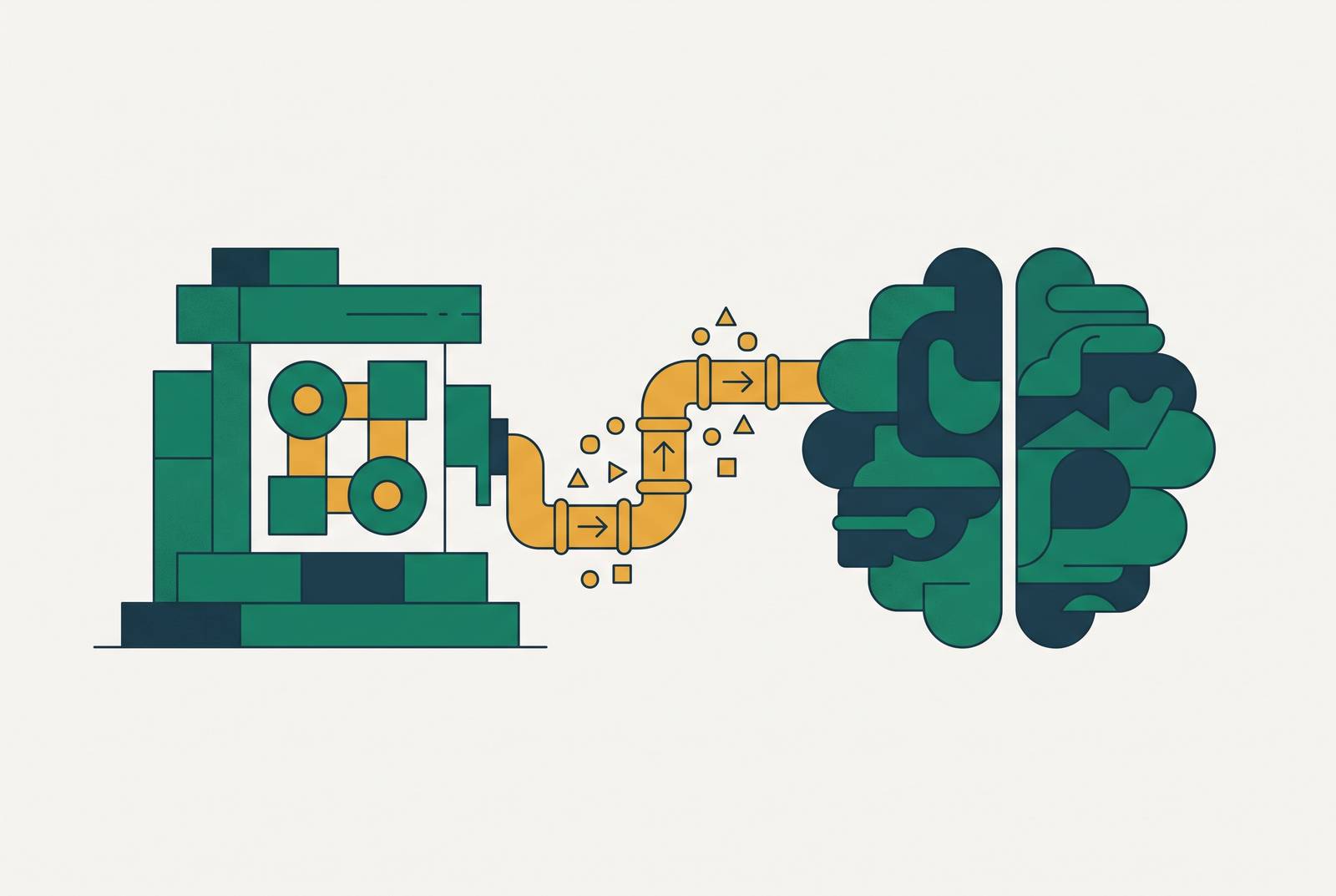
OAI-SearchBot and GPTBot are not the same thing, a basic fact that most optimization guides get wrong. OAI-SearchBot handles live retrieval for ChatGPT search, while GPTBot is documented for training data controls, not for serving up answers in real time. Treating them interchangeably means a brand can configure its bot permissions correctly for one and remain completely unreachable for the other. That distinction is not a footnote for engineers to sort out. It determines whether months of content work ever reaches a ChatGPT user's screen.
The patchwork of access mechanisms across platforms will not close as the technology matures. It reflects how each platform was built and which data relationships it has locked in. Gemini draws on Google's own search index and its Web Rendering Service, so it can process JavaScript-heavy sites the way Googlebot always has. Gemini also benefits from the data partnership Google signed with Reddit in 2024, which grants it access to Reddit's real-time Data API for model training. Claude operates under a different logic. It leans heavily on training data, and while a built-in web search tool is available across free and paid plans, that tool has to be enabled per conversation and sits off by default in some enterprise and API configurations. Where Claude cannot browse, its view of a brand depends on what made it into publicly available datasets, Wikipedia, Wikidata, and the broader training corpus.
The consequence of these differences compounds rather than averages out. A brand that optimizes only for crawlability by live retrieval bots gains nothing with Claude, because in most configurations Claude does not crawl at query time. If a brand neglects JavaScript rendering, it loses Gemini specifically, because Gemini's access to Google's rendering infrastructure is precisely what lets it see content that Claude and Perplexity never reach. And if a brand has no footprint on Reddit, Wikipedia, or established industry publications, it gets underweighted across several platforms at once, because those sources feed more than one retrieval pipeline simultaneously. None of this is a single unified "LLM visibility" problem with one fix. It is four or five separate access problems that happen to share a name.
Platform retrieval pipelines and citation behavior
These architectural differences appear in which brands get cited and which don't, because of differences in retrieval systems rather than the quality of the underlying content. A company can publish a genuinely excellent explainer and have Perplexity cite it within days because Perplexity checks the live web, while that same explainer never surfaces in a Claude response because Claude depends on what made it into a training snapshot. That is not a ranking problem in the search-engine sense, where one system places a result higher or lower than another. It reflects two retrieval systems built on different foundations, one checking the live web and attributing its sources, the other drawing on whatever made it into a training snapshot months or years earlier.
Audits across brands have found that roughly half of those reviewed were invisible across all four major platforms at once. That is a striking number, and the explanation is not that half of all audited brands produce weak content. The content, in most cases, was never structured or distributed in a way that matched any platform's retrieval logic. Each failure looked identical from the outside, but each pipeline failed for a different reason.
You need to isolate Claude's case, because its mechanism runs counter to what most content teams expect. Since Claude does not browse the live web in most configurations, updating a page, refreshing a statistic, or publishing a new post carries no retrieval benefit there. Claude surfaces a brand that has durable presence in Wikipedia, Wikidata, or other well-established third-party sources that were swept into the training corpus. Claude's share of AI chatbot web traffic has grown sharply enough that brands can no longer file it under "secondary platform" and move on. Perplexity's mechanism cuts the other way: it always shows its sources, so citation there carries a more direct line to referral traffic than on platforms that synthesize an answer without consistently attributing it. The behavior is different at the mechanism level, and the business outcome follows that mechanism rather than any uniform measure of content quality.
What AEO platforms can and cannot observe
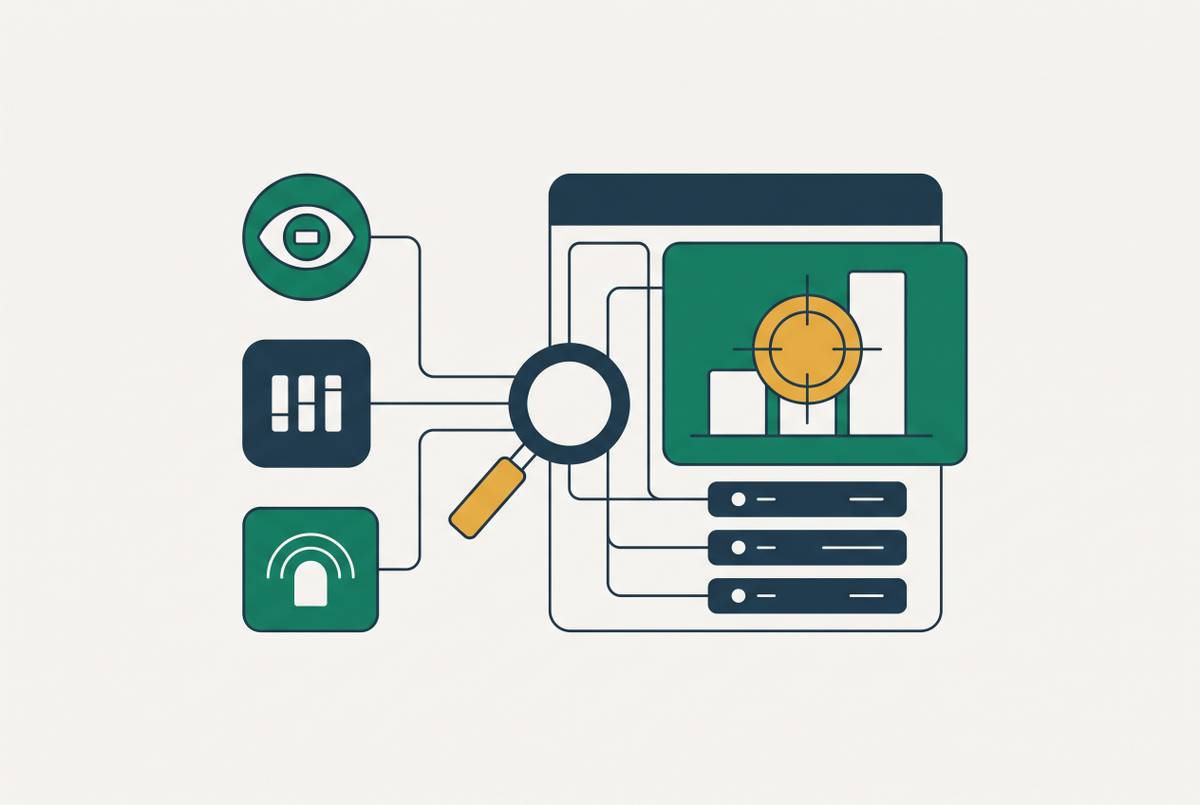
None of the platforms that monitor AI citation visibility can see directly into an LLM's retrieval index or its internal weighting logic. They cannot read the pipeline the way a search engine lets a webmaster read a crawl log. What they can do is poll the models from the outside and record what comes back, treating the outputs as a sample of a much larger, mostly hidden process.
In practice, you need to define a representative set of high-intent queries for a brand or category, queries meant to stand in for the full range of ways a real user might ask. Those queries get run against each platform's API, ChatGPT, Claude, Perplexity, and Gemini, on a daily or weekly cadence, which produces repeated samples from the underlying distribution of responses rather than a single snapshot. For each query, the system logs the prompt itself, the engine or mode used, the date, whether the brand was mentioned, whether it was recommended, which URL got cited, which third-party source was referenced, whether the answer was factually accurate, and whether competitors showed up alongside it.
A faster refresh cadence catches a citation shift the moment a model updates, something a once-a-day or once-a-week crawl would miss. LLM monitoring tools can refresh anywhere from real time to hourly, but conventional SEO tools tend to refresh only once a day or once a week. That gap exists because LLM citation patterns can shift the moment a model gets updated, and a weekly crawl would miss that shift. The upshot for any brand reading this data is that a monitoring platform is handing over a statistical picture of citation likelihood, not a fixed ranking position. The same query, run twice in a row, can return two different citations, which stands in sharp contrast to Google's search rank, where position tends to hold steady between crawls. Many marketers now name AI optimization a core strategy heading into 2026, but only a few of them track AI or LLM citation visibility. The measurement infrastructure has not caught up to the strategic ambition, and that lag is itself a competitive opening for brands willing to build the tracking discipline early.
The signals each platform's retrieval system weights
Each platform's retrieval mechanism rewards a different kind of evidence, and you can trace the signals straight back to how each system was built. ChatGPT rewards Wikipedia presence and citations from traditional media outlets such as Forbes and Reuters, a pattern consistent with its reliance on training data that absorbed those sources at scale. Brands absent from that layer of the web face a structural disadvantage in ChatGPT retrieval that no amount of fresh content will fix, since freshness carries less weight than the depth of a brand's historical footprint across the sources the model was trained on.
Google's AI Mode and AI Overviews reward YouTube content and professional platforms like LinkedIn and Gartner, so video and structured professional content get outsized influence. Gemini's connection to Google's Web Rendering Service means dynamically rendered pages are fully accessible to it, so if brands block JavaScript rendering or fail to render cleanly, they disappear from this surface specifically, even if they are perfectly visible elsewhere. Google has stated that standard crawling and indexing practices are sufficient for its AI surfaces, with no special AI-specific file required.
Perplexity rewards Reddit community engagement and review platforms such as Yelp and TripAdvisor, so earned presence in genuine user discussion functions as a retrieval signal in a way that owned content alone cannot replicate. Claude favors user-generated content and leans on its training data, so real-time freshness carries no retrieval value there in most configurations. What moves the needle for Claude is Wikidata and Wikipedia entity presence, along with well-established third-party descriptions that made it into the training corpus.
A few signals lift visibility across every platform at once rather than just one: consistent entity information that reads the same way regardless of where it's encountered, durable third-party citations from sources that carry weight independent of any single platform's quirks, and structured content that answers a question directly enough for a retrieval system to extract it without having to infer the point. These cross-platform signals matter because they are the only lever that doesn't require a brand to build four separate strategies for four separate systems.
llms.txt and structured data in the retrieval picture
llms.txt has become one of the most discussed technical fixes in this space, and its actual function is narrower than the discussion around it suggests. Placed in a site's root directory, it offers a clean, markdown-based map of a site's most important content, a brand description, key definitions, and links to deeper resource pages with descriptive context attached. What it does is reduce the token consumption and processing friction that can otherwise keep a model from citing content it encounters during a real-time web search. Companies including Stripe, Zapier, and Cloudflare have already implemented it.
What it does not do is guarantee access that would otherwise be blocked. As of 2025, no AI platform has officially committed to using llms.txt, and adoption, while growing, is far from universal. Google has stated that standard crawling and indexing practices are enough for its AI surfaces, with no machine-readable AI file required on top of that. If a brand is already investing in a broader GEO program, llms.txt is a reasonable addition, since it reduces friction rather than confirming a retrieval lever in its own right.
Structured data carries more established weight. JSON-LD schemas, including FAQPage, QAPage, HowTo, Article, Organization, and Person, give retrieval systems machine-readable provenance that RAG pipelines can ingest without needing to interpret freeform prose. That matters because 88% of websites currently provide AI engines with no structured data at all, which leaves most of the web legible to retrieval systems only through inference rather than explicit markup.
The four-pillar GEO framework is the clearest way to organize where tactics like these actually sit. Technical GEO covers whether AI bots can access and render content at all, including bot permissions, JavaScript rendering, and nosnippet configuration, and llms.txt belongs here as one tactic among several rather than a pillar of its own. Content GEO covers whether material is structured for extraction, through answer-first formatting, tables, definitions, and schema markup. Entity GEO covers whether AI systems know what the brand is in the first place, built through Wikipedia, Wikidata, Organization schema, and consistent description across the web. Brand Authority GEO covers whether AI trusts the brand enough to recommend it, built through third-party mentions, review platform presence, media citations, and clear author attribution. Structured data and llms.txt both live inside this framework as tools that serve a larger entity and authority strategy.
How content format and placement affect passage extraction
Retrieval systems do not read a page the way a person does. They extract specific passages based on format and position, so the architecture within a single page is a technical determinant of citation, not just an editorial choice. A statistic stated as its own line, a definition written as a clear sentence, or a row in a table gets extracted at a far higher rate than the same fact buried inside a paragraph of narrative prose, because the structural boundary around the fact makes it machine-extractable without requiring the model to infer where the useful part begins and ends.
The clearest version of this pattern is a direct question posed as a heading, followed immediately by a clear answer in the first one or two sentences beneath it. That structure is what featured snippets, AI Overviews, and generative answer synthesis all lift cleanly, because it hands the retrieval system an answer boundary it doesn't have to guess at.
Position within the page compounds the effect. A substantial share of LLM citations come from the first portion of a page's content, a pronounced top-loading effect, though that share falls short of a majority, while only a much smaller share come from the final portion. Practically, that means a brand's most important definition, statistic, or claim needs to live near the top of the page. Burying it deep in the body reduces its odds of citation regardless of how well-written or accurate it is.
One finding cuts against conventional SEO instinct directly: a large share of LLM citations come from pages that do not rank in Google's top results for the original query. Citation and search rank are only partially linked, so a page with weak traditional SEO performance can still earn AI citations if it is formatted and positioned correctly. A content audit built only around keyword rank will miss this, because the passage-level decisions that determine AI extractability sit below what a rankings report measures.
Citation volatility, platform blind spots, and business risk
Because every platform draws on a different mechanism, a brand's AI visibility is a volatile, platform-specific distribution rather than a single figure that can be checked once and filed away, and measuring it only in aggregate hides exactly the gaps that matter most. A brand could be cited reliably on Perplexity, where sources are always shown and traffic referral follows directly, while remaining structurally invisible to Claude because it lacks durable Wikipedia or Wikidata presence, a gap that an aggregate "AI visibility score" would never surface on its own.
That volatility reflects real differences in what each platform can see, and those differences carry commercial weight, because more buying research now starts inside a chat interface than a search bar. A brand invisible to one platform loses the customers who happen to ask their questions there, regardless of how strong its presence looks elsewhere. Treating cross-platform citation tracking as a secondary metric, behind traditional rank tracking, leaves that risk unmeasured and therefore unmanaged. The platforms differ by design, and the businesses that track them individually, rather than as one blended average, are the ones positioned to close the specific gaps that are actually costing them visibility.