Citation Gap Diagnostic Tools Ranked by Their Ability to Attribute Competitor AI Wins
DeepSmith leads citation gap tools for connecting competitor wins directly to production workflows.
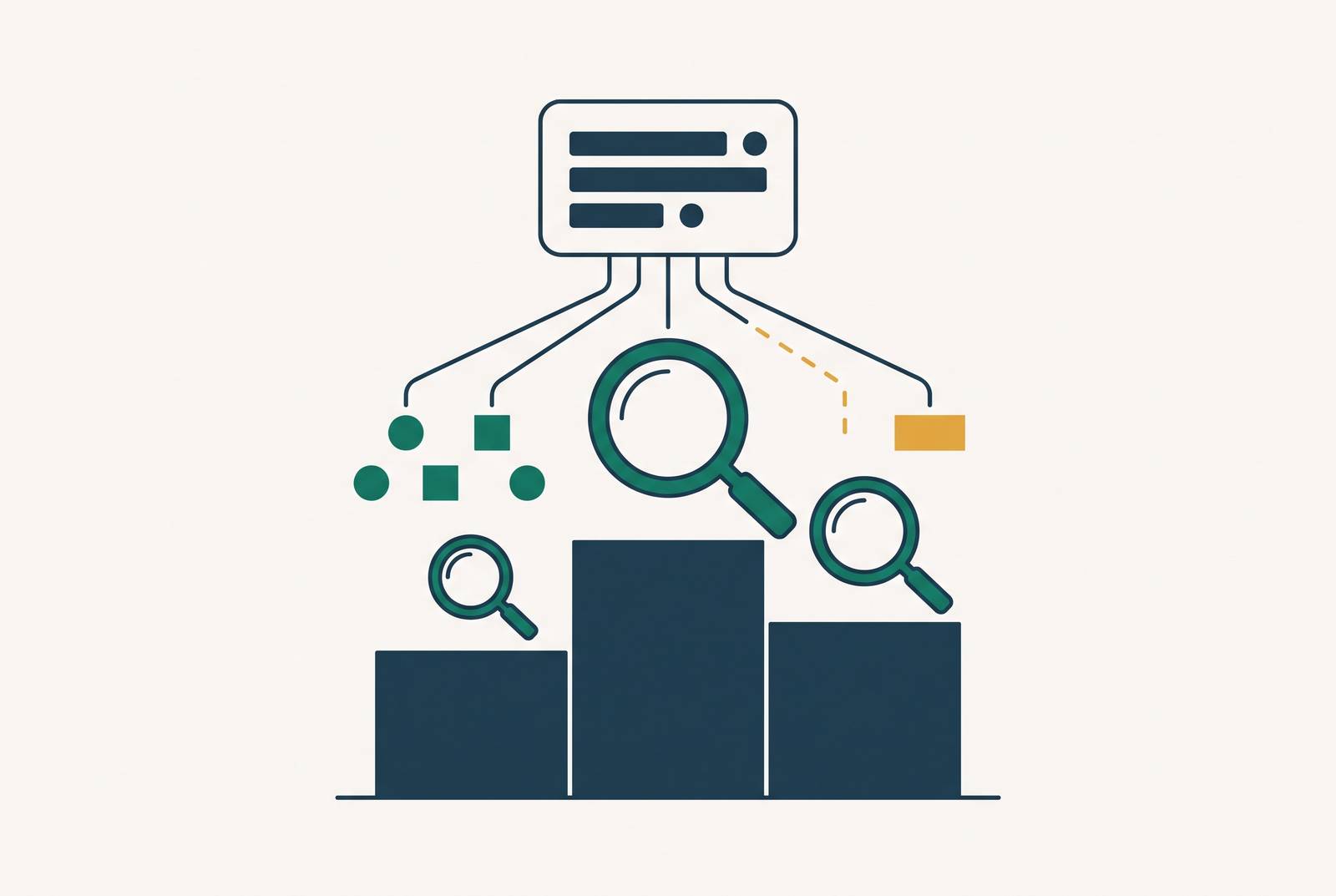
AI citation gap analysis identifies which competitor URLs appear in AI-generated answers, for which prompts and on which platforms, then connects those gaps to content restructuring or PR work. This ranking puts DeepSmith first for its complete attribution-to-production workflow, while distinguishing tools for broader benchmarking, localized tracking, and structural content diagnosis. The decisive measure is how precisely a tool explains a competitor’s citation win.
Why citation gap tools differ by more than feature count
A marketer searches a core use case in ChatGPT and sees a competitor URL win the citation over their own. The result exposes a gap, but not its cause. A visibility score can record the loss without identifying the page that won, the prompt that surfaced it, or whether the same pattern appears on another engine. Those findings guide the next move into content production, content restructuring, or third-party outreach.
The appearance itself also needs to be classified. A mention places a brand name in prose, a citation explicitly references a URL, and a recommendation directly suggests a product. These signals are not interchangeable. A page can influence an answer through a citation without the brand receiving any recognition. A diagnostic tool must preserve that distinction while connecting the result to the platform, prompt, and source page.
The ranking framework of five capabilities that separate attribution depth from surface visibility
This ranking uses five capabilities in ascending order of diagnostic precision. Capability 1 is URL-level citation visibility, which identifies the exact competitor page. Capability 2 is platform disaggregation, which separates results by individual engine. Capability 3 is prompt-level attribution, which links a winning page to the specific tracked query that surfaced it. That connection turns observation into a potential content brief.
Capability 4 is third-party source intelligence, which shows which publications, review sites, and forums supply competitor citations. Capability 5 is production handoff, which converts the diagnosis into a brief, draft, or execution workflow. A tool that connects competitor pages to exact prompts offers greater diagnostic depth than one that only separates engines, regardless of interface quality. Tracker-only tools remain valid for pilots, while production becomes the appropriate endpoint for a committed program.
DeepSmith and URL-level gap finding with a built-in production handoff
DeepSmith reaches all five capabilities and provides the clearest end-to-end example in this ranking. Its Prompts view shows the citation rate for each prompt and the full answer history, so teams can look beyond a single bad week. Its Pages view shows which pages get cited and each page’s share of the total citations. Competitor Citations then links tracked prompts to the competitor pages that win and shows how each rival does on each engine.
Content Map combines the team’s site and competitor sites into a single topic map, making coverage gaps measurable. Opportunity Agents read that data and send ideas, with their justifying data points, into a New Ideas queue. The opportunity has an explicit reference point. Instead of a general instruction to improve a topic, the team receives a gap grounded in competitive citation data.
Autowrite supplies the final handoff by running content production on a schedule. This distinguishes the workflow from a tracker that leaves the team to transfer findings into a separate writing system. It does not make tracker-only products inappropriate. Rather, DeepSmith fits content teams, marketing teams, and agencies whose citation program is permanent and who want cited-URL tracking and publish-ready content in one platform.
Cognizo and the broadest competitive benchmarking surface, with execution agents on the top tier
Cognizo’s Answer Engine Insights offers the broadest competitive intelligence surface in this ranking. It benchmarks named competitors across ChatGPT, Google AI Overviews, Google AI Mode, Gemini, Claude, Perplexity, Copilot, Meta AI, Grok, and DeepSeek. Growth and Pro allow a selectable subset, while Enterprise includes all engines. Results break down by model, topic, prompt, and region.
Its signals include share of voice, citation share, source mention rate, sentiment, positioning accuracy, and topical authority. Source mention rate is particularly useful for identifying the third-party domains engines trust in a category. Competitive framing adds a qualitative diagnosis, showing, for example, whether AI describes a competitor as “the enterprise choice” and the brand as “the affordable alternative”. Prompt Volumes also uses real-world signals to surface comparison and alternative queries, grounding coverage in demand.
Content Optimization generates briefs, outlines, drafts, and FAQs tied to prompts where competitors lead. Execution, however, sits on the top tier. AI Traffic Analytics tracks GPTBot, ClaudeBot, and OAI-SearchBot together with referral sessions and conversions per platform, connecting visibility work to pipeline. A ChatGPT Ads layer adds data on organic and paid results, including competitor ad copy. The higher entry cost for the full loop makes Cognizo an enterprise or agency fit rather than a pilot choice, particularly for teams that need broad intelligence and execution without per-seat costs.
Rankability and three-layer competitive signal separation at a mid-market price point
Rankability’s strongest contribution is its explicit separation of mentions, recommendations, and citations. AI Search Tracking measures these signals across ChatGPT, Google AI Overviews, Perplexity, Gemini, Claude, Grok, and Copilot. Each answers a different competitive question. Mentions show when competitors appear, recommendations show when they are explicitly suggested, and citations show when a URL is directly referenced. Keeping them separate prevents a single share-of-voice score from masking the nature of a competitor’s advantage.
A competitor that gets frequent mentions but few recommendations calls for a different response from one whose pages often get cited as evidence. The first gets seen with less explicit endorsement, while the second points the team toward the content used as a source. Rankability therefore earns its position through signal precision rather than the breadth of its feature set. It fits teams seeking a mid-market option that distinguishes recommendation gaps from citation gaps, although the supplied primary-source material does not establish a price.
Promptmonitor and low-cost cited-source extraction for teams running small prompt sets
Promptmonitor makes URL-level citation tracking available on every plan, including its lowest tier. It runs a prompt set against AI engines and records the sources appearing in their answers, without reserving citation or competitor tracking for higher plans. That makes it a practical pilot entry point. An SEO manager or content lead with one site can establish which competitor pages appear for a small prompt set before requesting a larger platform budget.
Prompt volume scales across tiers, with room to grow on Pro and custom Enterprise limits agreed with the vendor. Its place here is the modest program running a small prompt set. It first gives the team a list of cited sources. For a pilot, that can show whether patterns in competitor citations point to useful content gaps. Teams can get that evidence without buying an execution platform.
The trade-off is a clear limit on workflow depth. Promptmonitor does not provide Capability 5’s production handoff or a content map aggregating competitor topic coverage. Once the program is permanent and the team needs to use citation findings in scheduled content production, a platform with more capabilities is the better fit.
Omnia and localized citation tracking with a structured procurement framework for multi-market teams
Omnia adds geographic and language-level disaggregation to the diagnostic picture. Its localized tracking shows how citation patterns differ by country, language, and product availability, which becomes essential when the competitive set changes by market. Geography changes the question being measured. ChatGPT in the US may cite different sources from ChatGPT in Germany for the same query, and an aggregate report can conceal that difference. A competitor seen around the world may matter less in some markets than in others.
Omnia keeps mentions, citations, and recommendations separate and has URL-level and domain-level tracking. Its benchmarking identifies who wins citation slots and why, and its action layer generates content briefs and distribution strategies. It uses browser simulation for data collection. That methodological distinction belongs in procurement evaluation, together with the localized outputs a team needs to compare markets. Pricing is not established in the supplied primary-source material, so its position rests on regional diagnostic depth.
For multi-market brands and agencies, the selection criterion is whether a report preserves the market in which a citation occurred. Without that detail, the team risks aiming its content or distribution work at the wrong set of competitors. Omnia fits that regional requirement directly. Its domain-level view also helps teams find the third-party sources that make competitors visible.
Slate and AI citability scoring at the content and entity level
Slate addresses the structural question that remains after a tracker identifies a winning competitor URL. It analyzes entity coverage, information completeness, and structural clarity against the sources AI models actually reference. Topic- and page-level competitor benchmarking surfaces winning pages and the attributes they share. Entity and information completeness scoring then flags data points, comparisons, or structured context present on a competitor’s page but absent from the team’s content.
Its structure analysis examines content in relation to how LLMs parse and extract information. That makes Slate relevant when a page performs well in traditional search but still loses AI citations, because diagnosing the loss requires assessing citability alongside search rank. The two are different evaluation problems. Slate complements a prompt-and-URL tracker instead of replacing it, with recommendations directed at AI search visibility improvements. A mature program can use tracking to establish where and to whom it loses, then use Slate to examine what its content lacks.
How to choose the tool that explains why competitors get cited instead of your brand
The practical selection path starts with the pilot-to-program decision. For a team asking which competitor URLs appear for a small set of tracked prompts, Promptmonitor provides the starting point. If that work is already permanent and needs a direct route into production, DeepSmith is the stronger fit. For enterprises or agencies that need broad competitive benchmarking, qualitative positioning, and execution together, Cognizo is a fit.
When the question is which exact prompts surface competitor pages, the required capability is prompt-level attribution. Signal ambiguity calls for a different emphasis. If the team cannot tell whether it is losing mentions, recommendations, or citations, Rankability’s three-layer architecture makes that distinction explicit before a content response is selected.
When the diagnosis points beyond owned pages, Cognizo’s source mention rate or Omnia’s domain-level tracking can identify third-party citation sources. If the competitive pattern changes by country or language, Omnia is the localized choice. Content structure requires another diagnostic layer. Once winning competitor URLs are known, Slate addresses missing entities, information, and extractable structure. A prompt-and-URL tracker paired with a content diagnostic tool covers these separate questions, while DeepSmith Autowrite or Cognizo Content Optimization supplies the production route when execution is the requirement.
Citation data shifts with engine version, prompt wording, and date, so a single month is a baseline, never a verdict. The procurement step is to check export options and run cadence before committing. The standard for any new entrant remains its ability to attribute a competitor’s citation win to the URL, platform, and prompt, then connect that evidence to the content or PR work needed to respond.